
Voodoo doll
CA$19.99
Hand-Crafted Ritual Poppets: Vessels of Intention and Spirit
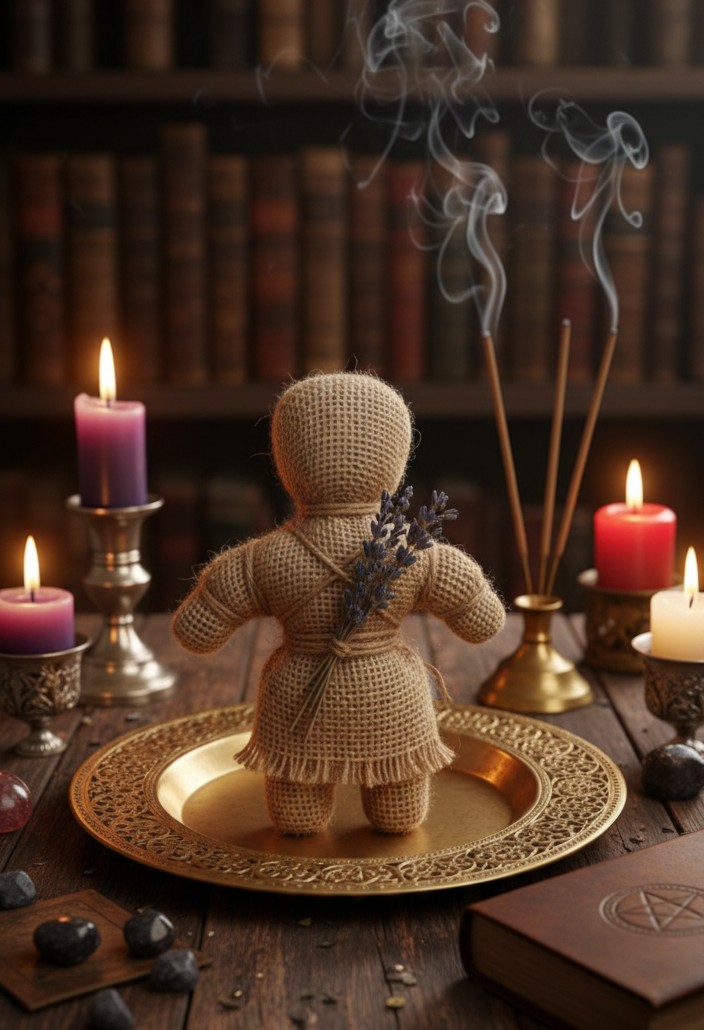
Often misunderstood and shrouded in cinematic myth, the Voodoo Doll—more accurately termed a Poppet or Effigy—is one of the oldest and most versatile tools in the practitioner's arsenal. This hand-stitched figure is a physical representation of a person, spirit, or intention, designed to act as a sympathetic link between the physical and metaphysical planes.
History and Origins
Contrary to popular belief, the "Voodoo doll" did not originate in Haiti or within the religion of Vodou. Its roots are a complex tapestry of global folklore. The use of sympathetic figures—items that represent the target of a spell—dates back to Ancient Egypt and Greece, where wax or lead figures were used for binding and protection.
The specific image of the "Voodoo doll" we recognize today is largely a product of New Orleans Voodoo, a unique syncretic blend of West African spiritual traditions, Native American herbalism, and European folk magic. In Europe, "Poppets" made of wax, grain, or cloth were common in British Isles witchcraft for centuries before the term "Voodoo doll" was ever coined. The association with New Orleans grew in the early 20th century, as the city’s vibrant, mysterious culture became a focal point for American folklore and, eventually, Hollywood dramatization.
Cultures That Use Them
While the names vary, the concept of the ritual effigy is universal:
West African & Diaspora Traditions: Used as vessels for spirits or to communicate with ancestors.
European Folk Magic: Known as "Poppets," used primarily for healing or protection in English and Celtic traditions.
Rootwork & Hoodoo: Utilized in the American South for "fixing" a situation or influencing a person’s behavior through sympathetic magic.
Ancient Greco-Roman: Known as Kolossoi, used to bind restless spirits or enemies.
Traditional Uses
Historically, these dolls were rarely used for the malevolent "pin-pricking" seen in movies. Instead, they served deep communal and personal purposes:
Healing: A doll would be created to represent a sick person, and herbs or cooling oils would be applied to the doll's "affected area" to draw out the illness.
Protection: Poppets were often hidden inside the walls of houses or under floorboards to act as a decoy, catching curses or negative energy meant for the inhabitants.
Binding: Used to "freeze" or stop someone from doing harm or spreading gossip.
Modern Mystical Applications
Today’s practitioners use these figures as a sophisticated psychological and spiritual focal point:
Self-Love & Empowerment: Creating a doll that represents yourself, filled with rose quartz and lavender, to boost self-esteem and perform self-healing rituals.
Manifestation: Stuffing a doll with "money-drawing" herbs like cinnamon and mint to attract prosperity.
Justice Work: Used in rituals to bring balance to a situation where the practitioner feels wronged or powerless.
Ancestral Connection: Placed on an altar to represent a specific ancestor, serving as a landing point for their energy during communication.
Product Specifications
Materials: Natural burlap, hand-stitched twine, and ethically sourced dried lavender.
Craftsmanship: Each figure is left "blank" so the practitioner can breathe life and specific intent into the vessel.
Disclaimer: This item is sold as a botanical curio and historical replica only. We make no claims or guarantees regarding supernatural results, medical healing, or physical outcomes. This is a tool for meditation and ritual focus. Please handle with respect for the traditions from which these tools emerge. Keep away from fire, children, and pets.