The Sanctum is Open. Your Journey Begins.


Curio Guide
Explore detailed descriptions and images of fascinating curios


Curios
A glimpse into fascinating objects from around the world.


Feathers: Black (Crow/Raven) & White (Dove/Seagull/General)
Feathers have been regarded as sacred conduits between the earthly and spiritual realms across nearly every global culture. In occult practice, they are not merely decorative but are viewed as vessels for the bird's specific "spirit medicine."
Black Feathers
Regional Origin: Universal (found globally via Corvid species like Crows and Ravens).
Historical/Traditional Occult Use: In many traditions, black feathers were considered signs from the ancestors or spirits of the underworld. They were often used in rituals related to shadow work, transition, and the protection of one's psychic boundaries.
Modern Metaphysical Use: Used in rituals for banishing, protection, and deep introspection. They are common tools for scrying and "reversing" work where one needs to return negativity to its source.
Occult Benefits: Black feathers possess the energy of the void. They help the practitioner navigate the "hidden" or unconscious aspects of the self. They are highly protective, acting as a shield that absorbs external malice, and are indispensable in rituals requiring authority, grounding, or a connection to the wisdom of the ancestors. They facilitate "letting go" of outdated patterns, as the color black represents the finality of an ending necessary for a new beginning.
General Use Benefits: Historically, these feathers were used for quills. Their dark, sleek appearance is also a symbol of elegance and mystery in home decor.
Ritual Uses: Place on an ancestor altar to signal readiness for guidance, use in a "banishing" jar to absorb unwanted energy, or keep near a workspace to maintain an aura of firm, unyielding protection.


Animal Bones, Skulls, and Skeletal Remains
Scientific Name: Ca₁₀(PO₄)₆(OH)₂ (Hydroxyapatite)
Regional Origin: Universal (Common in indigenous, shamanic, and folk-magical traditions globally).
Historical/Traditional Occult Use: Across history, bones have been viewed as the "final anchor" of an animal's spirit. They were never seen as "dead" but rather as a repository of the animal's specific medicine, wisdom, and survival instincts. Skulls, in particular, were used as vessels to house spirit helpers, facilitate divination, or act as powerful talismans for protection and territory-marking.
Modern Metaphysical Use: Used in the construction of altars, for ancestral communication, and as "totem" tools to call upon the traits of a specific animal—such as the cunning of a coyote, the patience of a deer, or the foresight of a raptor.
Occult Benefits: Bones hold the "archetypal blueprint" of life. They provide a grounding, earth-based resonance that is excellent for spirit-contact. A skull specifically acts as a psychic focal point—a "receiving dish" for messages from the beyond. They help the practitioner connect with the cycles of life, death, and rebirth, serving as a blunt, honest reminder of the reality behind the illusion of the physical world. They are highly effective at "grounding" erratic energy and providing a stable foundation for scrying or spirit-mediumship.
General Use Benefits: Highly prized for their natural, rustic aesthetic. They serve as striking, sophisticated focal points for home decor, often utilized in "dark academia" or "curio-style" interior design to evoke a sense of ancient wisdom and natural connection.
Ritual Uses: Place a skull on your altar to anchor ancestral spirits. Use smaller bones in divination or "throwing" sets to seek guidance, or keep a bone near your workspace to call upon the specific instinctual traits of the animal (e.g., bone of a predatory bird for focus and sight, bone of a deer for grace and vigilance).
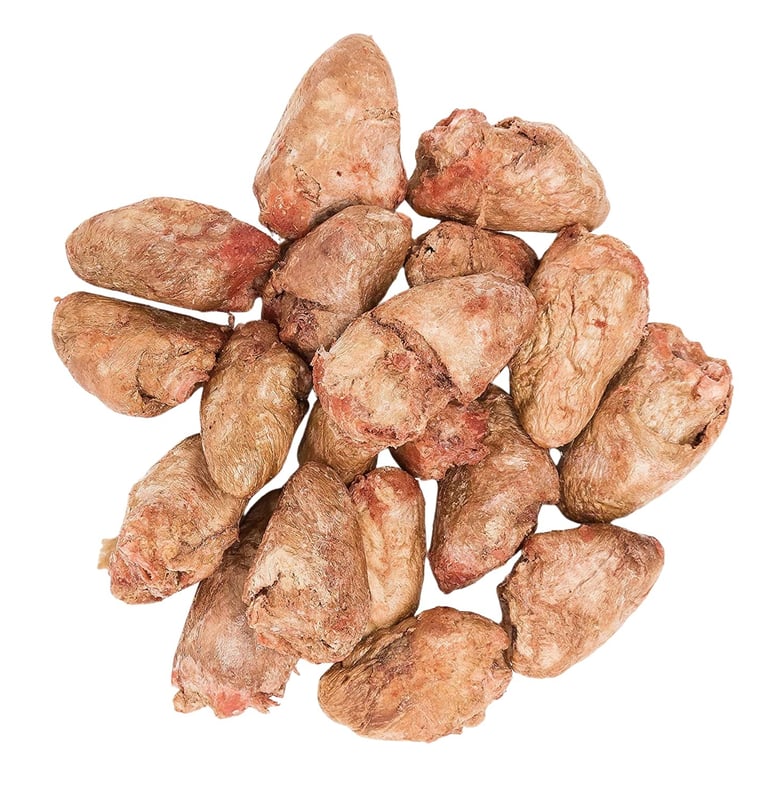
Animal Heart (Anatomical/Symbolic Representation)
Scientific Name: Myocardium (Organ tissue)
Regional Origin: Universal (Central to sacrificial and symbolic magic in ancient Mediterranean, Celtic, and African Diaspora traditions).
Historical/Traditional Occult Use: The heart has been revered as the literal seat of the soul, emotion, and will. In ancient Egyptian rites, the heart was weighed against the feather of truth. In various folk traditions, it was used in love-binding or "commanding" spells to ensure loyalty, passion, and complete emotional alignment between parties.
Modern Metaphysical Use: Used in rituals involving intense emotional focus—such as deep love, profound courage, or binding one's own will to a singular, life-altering goal. It represents the "engine" of the practitioner's intention.
Occult Benefits: The heart holds the "frequency" of one's deepest desires. Metaphysically, it acts as an amplifier for passion and conviction. It is the most potent tool for "heart-centered" magic, allowing the practitioner to bypass superficial thought and tap into the primal, beating energy of their true intent. It provides a raw, grounding force that ensures a spell is fueled by genuine, life-force energy rather than mere mental suggestion.
General Use Benefits: While primarily for ritual, it serves as a powerful artistic focal point in a "curio-style" collection, representing the bravery required to live authentically and the willingness to lead with one's emotions.
Ritual Uses: Place a dry or symbolic representation of a heart on your altar to anchor a love or devotion spell. Burn the heart (or a representation of it) during ritual work to "release" your deepest emotions into the smoke, thereby broadcasting your intention with maximum intensity. Use it as a vessel for sealing a promise or vow, binding your word to your very life-force.
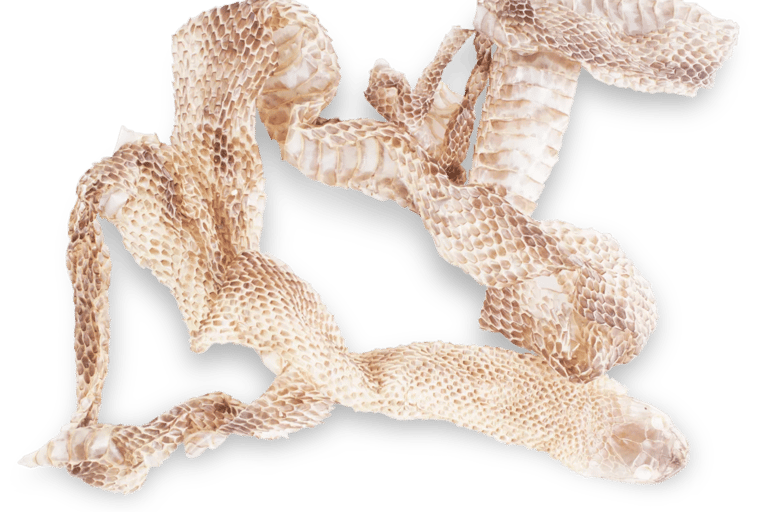
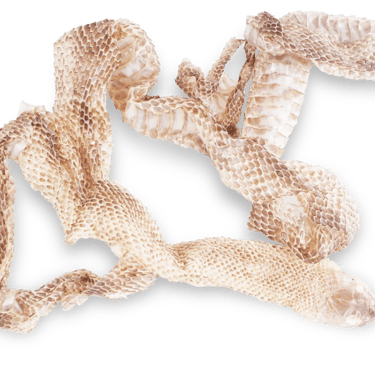
Snake Skin (Shed)
Scientific Name: Squamata (Epidermis)
Regional Origin: Universal (Found in folklore from the Americas, Africa, Asia, and Europe).
Historical/Traditional Occult Use: Across nearly all cultures, the snake skin is the quintessential symbol of transformation, rebirth, and the shedding of the "old self." Because snakes shed their entire skin to grow, they have been used historically in healing rituals, rites of passage, and spells intended to cure chronic illnesses or "reset" a person's life after a period of intense trauma.
Modern Metaphysical Use: Used as a focal point in rituals for major life transitions, personal evolution, or when a practitioner needs to break free from self-imposed limitations or past identities.
Occult Benefits: Snake skin possesses the energy of "dynamic change." It helps the practitioner let go of stagnant patterns, old fears, and outdated versions of the self. Metaphysically, it acts as a catalyst. It signals to the universe that the old reality is no longer a fit and that the practitioner is ready to step into a new skin. It is also deeply connected to the root and sacral chakras, promoting physical vitality and sexual/creative energy renewal.
General Use Benefits: Snake skins are highly valued as specimens for natural history collections and curio cabinets. They are sophisticated, tactile reminders of the constant cycle of growth and renewal inherent in nature.
Ritual Uses: Place a piece of snake skin in your mojo bag to aid in a difficult life transition. Use during a New Moon ritual to represent the "shedding" of a habit you wish to leave behind, or keep near your altar as a reminder of your own ability to regenerate and evolve, no matter how stagnant your current situation may feel.
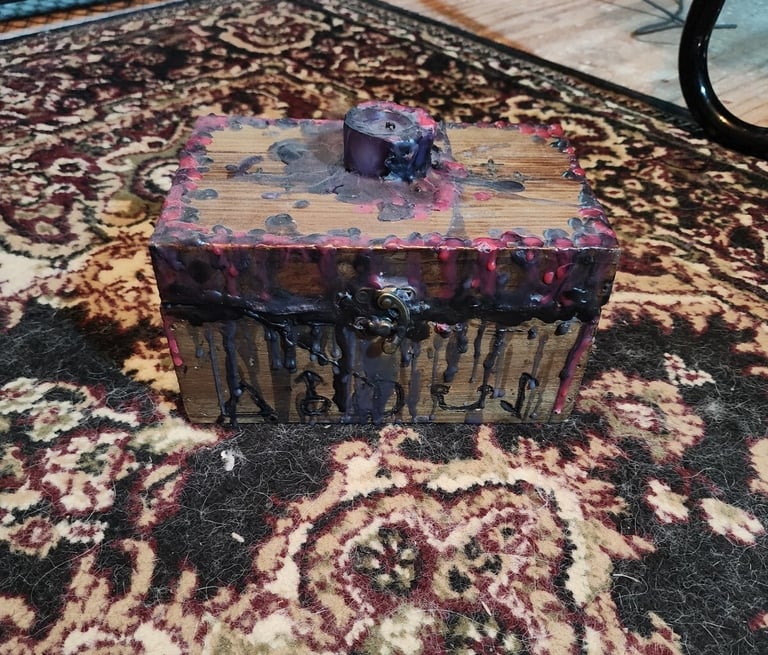
Dybbuk Box (Spirit/Entity Vessel)
Scientific Name: N/A (Ornate wooden/metal cabinetry or container)
Regional Origin: Eastern Europe (Jewish Folklore/Ashkenazi tradition)
Historical/Traditional Occult Use: In Jewish folklore, a dybbuk is a malicious, possessing spirit—the dislocated soul of a dead person. A "dybbuk box" (historically a wine cabinet or small chest) was used by mystics or rabbis to contain or "trap" such an entity, preventing it from causing harm to the living. It served as a spiritual quarantine, a vessel designed to hold energy that was too volatile or dangerous to remain loose.
Modern Metaphysical Use: Reclaimed by modern occultists as a "containment vessel" for intentional shadow work, "trapped" negativity, or complex entity-based manifestations. It is treated with extreme caution, acting as a lockable archive for unwanted spiritual baggage.
Occult Benefits: The box acts as a "spiritual vault." It is the ultimate tool for containment. If you are dealing with a recurring, intrusive thought or an energetic "parasite" that refuses to leave, you can perform a ritual to "transfer" that energy into the box, sealing it away. It forces the practitioner to confront their fears and consciously decide what they are keeping and what they are discarding. It is a powerful psychological and metaphysical anchor for "locking away" the past.
General Use Benefits: Its aesthetic is often Gothic, antique, or ornate, making it a highly desirable piece for collectors of oddities and dark academia enthusiasts. It serves as a striking, enigmatic "curiosity" that invites philosophical questions about the nature of ghosts, memory, and our ability to control our surroundings.
Ritual Uses: Write down a specific fear, haunting memory, or negative pattern on paper and lock it inside the box to "imprison" the influence. Keep the box in a concealed location on your altar to signify things that are "put away" and out of your current path. Use it as a focal point for rituals where you are actively reclaiming power from a situation that previously made you feel helpless.
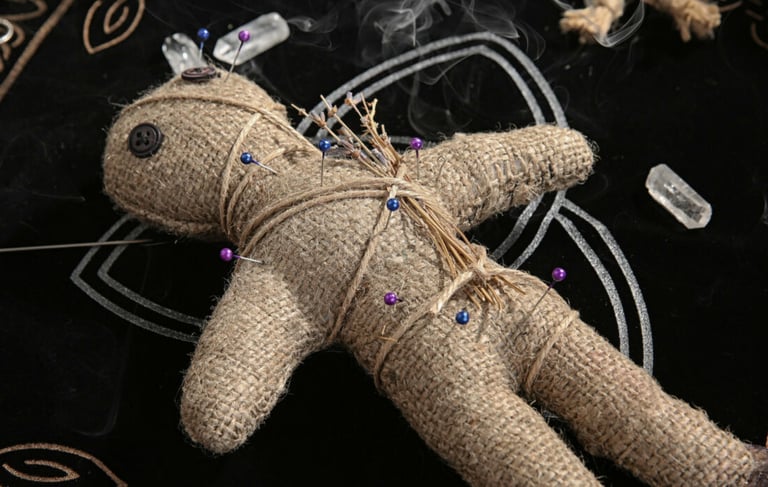
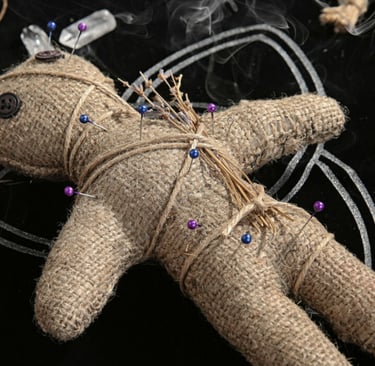
Poppet (Voodoo Doll/Effigy)
Scientific Name: N/A (Textile, clay, wax, or organic material construct)
Regional Origin: Universal (Rooted in European "poppets," African "nkisi" traditions, and Hoodoo "doll magic").
Historical/Traditional Occult Use: The poppet is the classic embodiment of sympathetic magic—the principle that "like affects like." Historically, they were crafted to represent a specific person, spirit, or goal. By working on the doll (binding, blessing, or healing it), the practitioner influences the corresponding target in the physical world. They have been used for centuries for healing, protection, love-drawing, and occasionally binding or banishing work.
Modern Metaphysical Use: Used as a focal point for intentional, long-term spell work. It serves as a permanent surrogate for a person or a situation, allowing the practitioner to direct energy precisely where it is needed without the target being physically present.
Occult Benefits: A poppet acts as an "energetic bridge." Once the doll is "baptized" or named, it becomes a living conduit for the practitioner’s will. It allows for highly focused, multi-layered spellwork—pins, herbs, oils, and knots can all be applied to specific parts of the doll to influence specific aspects of the target’s life (e.g., pinning the "heart" for love, or the "feet" to influence travel). It provides a concrete, physical anchor for the practitioner’s focus, preventing energy from dissipating before the desired outcome is achieved.
General Use Benefits: They are deeply personal, tactile art pieces. In a curio collection, they represent the "human" element of magic, serving as a sophisticated reminder of the power of intent to influence our interpersonal connections and personal circumstances.
Ritual Uses: Stuff a poppet with herbs corresponding to your goal, or "baptize" the doll with a name tag. Dress the doll with specific oils (e.g., Elysium Fields skin oil for beauty/healing, or Etheric Sanctum blends for protection) to "charge" the surrogate with the desired energy, and keep in a private, safe space to maintain the continuous flow of the spell.


Iron Nails (Cold Iron Spikes)
Scientific Name: Fe (Ferrous Metal)
Regional Origin: Universal (Ancient metallurgy and blacksmithing traditions).
Historical/Traditional Occult Use: Iron has been widely regarded as the ultimate deterrent against malevolent spirits, fairies, and "otherworldly" entities. Historically, blacksmiths were viewed as semi-magical figures because they commanded the transformative power of fire to shape "Cold Iron." Nails, specifically, were used to "pin" or "fix" energy—driven into thresholds, doorframes, or earth to create a permanent, non-negotiable anchor for protection or binding.
Modern Metaphysical Use: Used to "fasten" an intention into the physical plane. When you need a spell to be unshakable, immovable, or to create a boundary that absolutely cannot be crossed, iron nails are the standard tool.
Occult Benefits: The power of iron is its sheer, immovable density. It represents the "Earth" element at its most rigid and disciplined. When used in a ritual, it acts as an energetic "stake," pinning your will into the fabric of reality. It effectively severs unwanted spiritual connections and acts as a physical wall against psychic intrusion. Iron doesn't "ask" the energy to leave; it commands it to stop.
General Use Benefits: Highly functional in DIY and home repair, they possess a raw, industrial aesthetic that pairs perfectly with "dark cottage" or "alchemist" interior decor. They serve as a grounded, tactile reminder of strength and structural integrity.
Ritual Uses: Drive a nail into the four corners of a property to "lock" a protection spell into the land. Use to pin a paper petition to an altar board to ensure the request is "fixed" in place, or keep a small iron nail in your pocket as a portable "anchor" of strength during intense, chaotic, or draining interactions.
Curios Uncovered
Dive into fascinating stories and detailed descriptions behind each unique curiosity we showcase.


Curio FAQs
What is a curio?
A curio is a small, interesting object collected for its uniqueness. These can even be unique or unusual ingredients or trinkets outside of the average ownership.
How are curios displayed?
Curios are often displayed in glass cabinets or on shelves to highlight their details.
Can I clean my curios safely?
Yes, but use gentle methods like soft cloths and avoid harsh chemicals to preserve their condition.
Are curios valuable?
Value varies greatly depending on origin, rarity, age, and condition.
Where do curios come from?
They can come from many places, including unique purchases, travels, antiques, and family heirlooms.
How do I identify the origin of a curio?
Look for maker’s marks, materials used, and research similar items to trace its background. A Record of Providence is very helpful in tracking and creating a rich historical record of an item, begin yours with us today.